

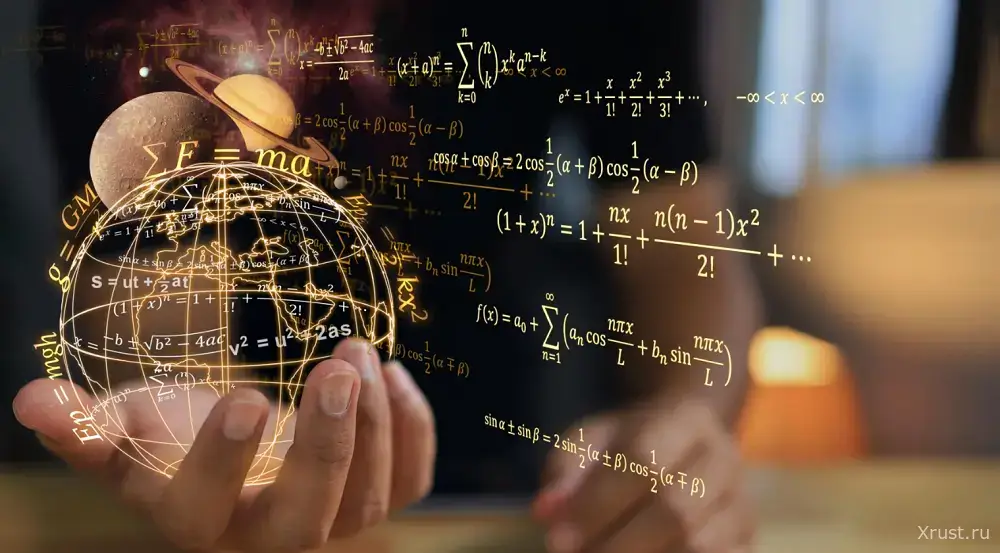
New artificial intelligence developed at the University Duke, can identify simple patterns in complex systems such as climate, biology and mechanics. This AI analyzes data about systems changing over time and creates compact mathematical models that help scientists better understand their behavior.
AI that finds simple rules in complex systems
Artificial intelligence helps uncover hidden patterns
Scientists at Duke University have developed a new artificial intelligence (AI) that can discover simple, understandable rules underlying highly complex systems. These systems may include fields such as physics, biology, climatology, and engineering. AI is capable of analyzing dynamic data about a system, identifying fundamental patterns, which greatly facilitates the process of scientific research.
How AI analyzes complex data
One of the unique features of this system is the ability to work with nonlinear systems containing thousands of variables. Through data analysis and the application of deep learning, AI reduces complex interactions in a system to a few key variables while maintaining accurate predictions and a reflection of the system's actual behavior. As a result, scientists receive compact models that are easy to interpret, but at the same time accurately reflect the dynamics of processes.
An innovative approach to the study of the evolution of systems
The developed AI was inspired by the work of scientists studying dynamic systems. It helps you find simple equations that describe complex systems. For example, in physics, the trajectory of a cannonball can be described by a simple linear equation, despite the huge number of factors influencing its behavior. In this case, AI helps reduce the number of variables and makes the description of the system more accessible to scientists.
Technology applicable in different fields
The new method was tested on a number of different systems, including mechanical devices, electrical circuits and models used in climate science. In each case, the AI found several hidden variables that influenced the system's behavior. Reducing the number of these variables by tens of times compared to traditional methods allows you to significantly simplify analysis and forecasting.
The power of interpretability and data simplification
One of the key advantages of the method is not only accuracy, but also the ability to interpret the results obtained. When models become compact and simple, researchers can link them to existing theories, which helps find new approaches to solving scientific problems.
Predicting and identifying stable states of a system
In addition, AI can help identify stable states of systems, which are known as attractors. This is important for determining whether systems are in a healthy state or approaching instability. The system can be used to diagnose and predict behavior, which is especially useful in cases where traditional equations cannot be applied.
The future of artificial intelligence in science
A team of scientists from Duke University continues to explore the possibility of applying this approach to other areas. In the future, they plan to use AI to create “machine scientists” who will help speed up the process of scientific discovery and turn AI into a tool for independent research.
Xrust AI that finds simple rules in complex systems
- Если Вам понравилась статья, рекомендуем почитать
- Programming: Vibe Coding - revolution 2026
- Agentive and Physical AI - examples for dummies


